Skip to content
Evan Cortez
Resume

Right Angle Engineering · Provo, Utah

Evan Cortez.

Software engineer who owns the frontend and DevOps on a 3-person team, with heavy influence on the backend. I build billing systems, financial dashboards, and the tools operators use every day.

About

What I actually own.

Not a feature list. The parts of the system I am accountable for.

Right Angle Engineering

Frontend and DevOps, owned.

I own the production frontend and the DevOps path, with heavy influence on the backend. Day to day that means billing, operator UI, CI/CD, and the systems people actually run the company on.

Shipping in productionSee what I shipped
Right Angle Engineering

Billing the company runs on.

Custom bidding and invoicing that now accounts for ~70% of company MRR, per-company billing cycles, Stripe collections, and dashboards so leadership can see the numbers without exporting to a spreadsheet.

Shipping in productionSee the numbers

Impact

Outcomes that transfer.

Revenue systems, financial visibility, intake throughput, performance, and deploy reliability—from Right Angle Engineering, framed for the next team.

~70%

Company MRR now running through the bidding and invoicing system I built—and growing

Billing

Per-company billing cycles so commercial terms live in software, not spreadsheets

Dashboards

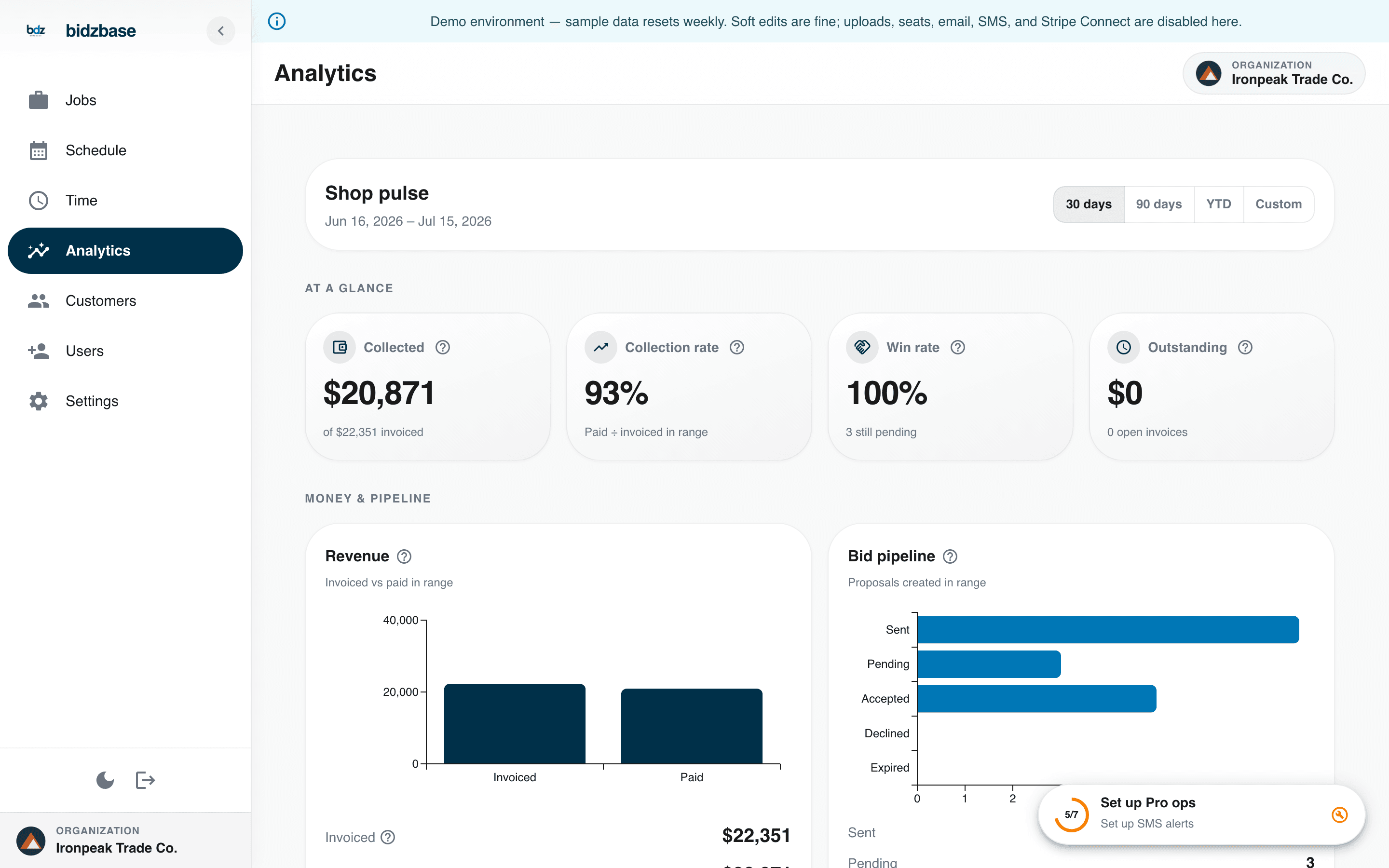
Analytics used for company financial analysis—MRR, collections, commercial performance

~2×

Throughput on high-volume intake after portal automation

~3×

Faster load on the heaviest production screens

Zero-downtime

Containerized ECS/ALB deploy path I own, replacing brittle one-box releases

Experience

What I shipped at Right Angle.

Three-person engineering team. I own frontend and DevOps, with heavy influence on the backend. Promoted from project manager after building the internal tools myself.

Built the billing system the company runs on

Designed and shipped the custom bidding and invoicing platform that now accounts for ~70% of company MRR—and growing—including per-company billing cycles so each customer can run on its own commercial calendar.

Pricing catalogs, bid→invoice APIs and UI, and commercial terms that used to live in people’s heads.

Tied collections to the work

Built Stripe payment flows that charge when work is approved—so collections follow the job, not a spreadsheet chase.

Card-on-file Autopay, settlement jobs, and failed-payment alerts across the full payment lifecycle.

Made the numbers visible

Built analytics dashboards used for company financial analysis—MRR, collections, and commercial performance—so leadership can see the business without exporting to a spreadsheet.

Operators and finance looking at the same system of record.

Automated high-volume intake

Owned integrations that pull work from external portals into internal APIs—cutting intake ops time roughly in half.

Higher throughput on the same book of work without proportional headcount; grounded in prior PM experience on those workflows.

Made the hottest screens fast

Cut API traffic by ~66% and made the heaviest screens roughly 3× faster through request architecture, pagination, and serializer cleanup.

Day-to-day views feel near-instant; operators spend time working, not waiting.

Owned the deploy path

I own DevOps on a 3-person team: containerized ECS/ALB migration, GitHub Actions CI/CD, and production tests in Jest and PyTest.

Zero-downtime deploys instead of brittle one-box releases. Mentored a software intern as the day-to-day technical contact.

Digitized document production

Solo-built in-app stamping and packet customization so deliverables no longer depended on physical office handoffs or third party software.

A high-frequency production path that works for distributed teams—not just people in the same building.

Product Thinking

How I work.

Clear principles for turning messy operational problems into software people rely on.

Understand the workflow before writing code

I learn how work actually happens—handoffs, exceptions, and bottlenecks—before proposing software. Prior ops experience makes the constraints concrete.

Technology should support business goals

Stack choices follow the outcome: cash collected, hours saved, reliability under load—not novelty for its own sake.

Prefer simple systems over unnecessary complexity

Clear boundaries and boring defaults beat clever abstractions that nobody wants to maintain.

Ship early and improve through feedback

A usable product in users' hands beats a perfect plan. Iteration is the product process.

Measure outcomes instead of output

Fewer requests, faster load times, less manual work, and healthier collections—not story points.

Build products that solve real problems

If it does not reduce friction in a real workflow, it does not belong in the roadmap.

Design software around users—not developers

Interfaces and data models should match how operators think about their day.

Technologies

Tools used to ship.

Stack behind the production ops platform at Right Angle Engineering—and BidzBase. Not a skill meter.

Frontend

  • React
  • TypeScript
  • Next.js
  • React Query
  • Three.js
  • MUI
  • CSS

Backend

  • Python
  • Django
  • Django REST Framework
  • Dramatiq
  • Node.js

Integrations

  • Puppeteer
  • Stripe webhooks
  • S3 uploads
  • GraphQL (Linear)

Cloud

  • AWS
  • ECS
  • ALB
  • EFS
  • S3
  • Secrets Manager

Infrastructure

  • Docker
  • AWS CDK
  • Nginx

Databases

  • PostgreSQL
  • MySQL
  • Redis

DevOps

  • GitHub Actions
  • Docker Compose
  • CI/CD
  • Jest
  • PyTest

Payments

  • Stripe Billing
  • Stripe Connect
  • PaymentIntents
  • Autopay

Side product

BidzBase

A production SaaS I designed, built, and shipped on the side—idea to real users in about a month. Proof I can own a product end-to-end, not the whole story of the work.

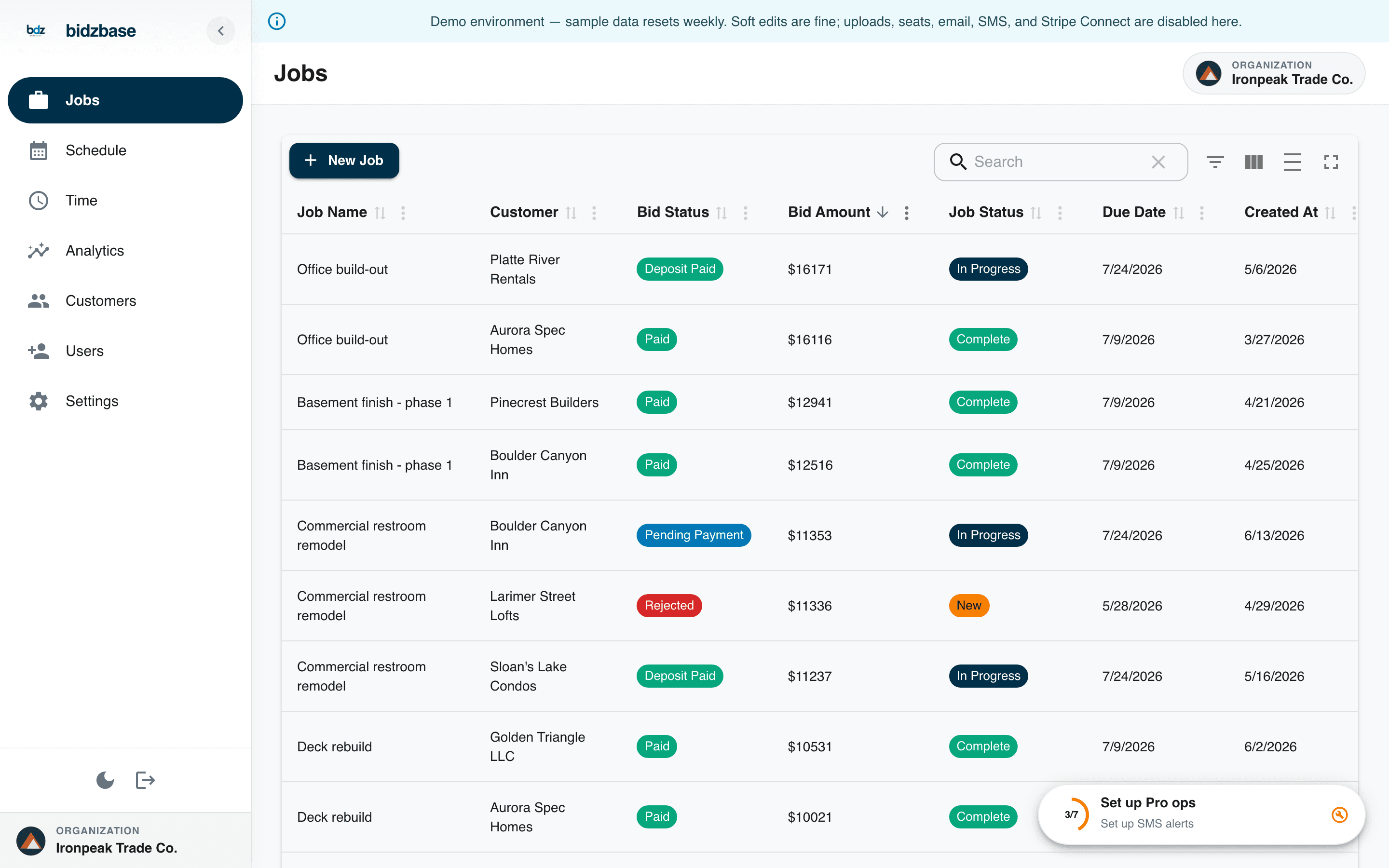
BidzBase job detail with line items, bid status, and invoice actions
Job detail — estimates, bids, and status in one place
BidzBase analytics dashboard with collections and bid pipeline
Shop analytics
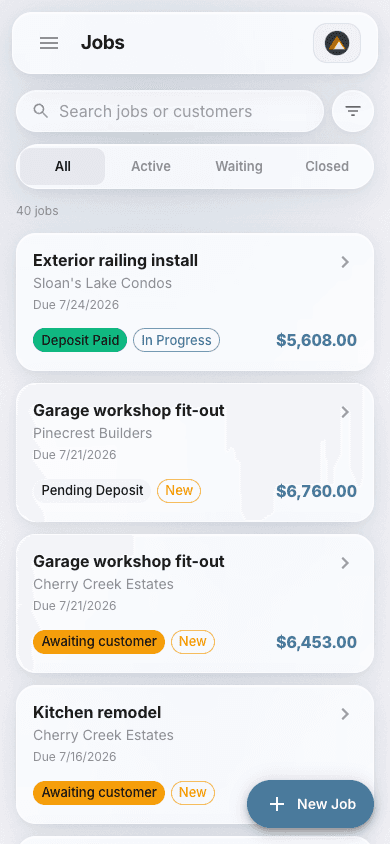
BidzBase jobs list on a phone
Jobs on mobile

The Problem

Small subcontractors and trade shops still stitch estimating, proposals, scheduling, and collections together across spreadsheets, texts, and disconnected tools. Work falls through the cracks. Payments slow down. Owners spend their evenings chasing paperwork instead of running the shop.

The Solution

BidzBase is a production SaaS that follows the real workflow: estimate → send proposal → customer accept/decline → invoice → get paid. Scheduling, time tracking, and analytics sit on top of the same job data so the business runs from one system of record—on desktop or phone.

Architecture

Multi-tenant by organization. A Django API owns domain logic. React powers the operator experience across breakpoints. PostgreSQL, Redis, and S3 back the core. Stripe, SendGrid, and real-time channels connect the product to money, messaging, and live updates.

What I learned shipping it

A usable core in a month beats polishing adjacent surfaces. Multi-tenant edge cases show up fast once real users arrive. Payments, permissions, and mobile ergonomics deserve more design time than almost anything else in the stack.

What the platform covers

Multi-tenant SaaS architectureResponsive / mobile-friendly UIStripe subscriptionsStripe Connect paymentsSchedulingTime trackingAnalytics dashboardRole-based permissionsEmail automationDocker deploymentAWS infrastructurePDF generationReal-time updates

BidzBase architecture

A simple system with clear seams.

How BidzBase is wired in production. Hover each layer to see why it was chosen.

Connected integrations

Why this layer

Users

Operators, managers, and customers interacting with the product every day.

Education

Background.

Concise on purpose. The work above carries more weight than coursework.

Mountainland Technical College

Web Development Certificate

Completed 2024 · JavaScript, React, Node.js, REST APIs

Utah Valley University

Information Systems

Coursework toward B.S. · ~3 semesters remaining

Contact

Let's talk about the work.

Open to conversations about engineering roles where ownership, shipping, and business impact matter.

Command palette

Jump to a section or open a resource